Electric
About our Electric Department
The ZBPW’s electric distribution system consists of approximately 147 miles of primary line to service its 6,800 customer accounts, and has annual sales exceeding 390,000 megawatt-hours.
The Benefits of Public Power
Zeeland BPW is powered by our incredible community which comes with heapings of benefits including:
- Low electric rates
- High reliability
- Dedicated local service
- Community focused initiatives
- Economic development
- Local decision-making

Inside Our Power Plant
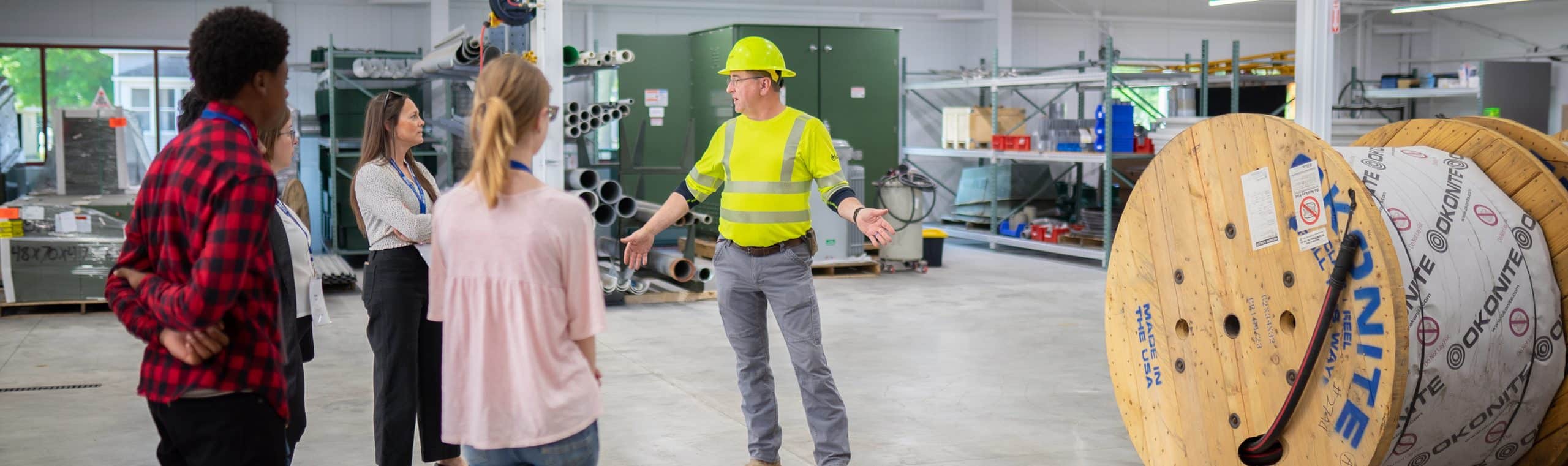
From the control room to the power lines, every part of this facility plays a role in delivering reliable and affordable energy to homes, schools, and businesses in Zeeland.
And that’s community-powered.
Service Area Map

Who Owns What?

When damages occur, who is responsible for making repairs?
Meter – Measures the amount of electricity your home consumes, typically in kilowatt-hours (kWh). Utilities use meter readings to determine your monthly bill.
Meter Socket – The mounting device or enclosure on the exterior of your home where the electric meter is installed. It connects the incoming power lines to your home’s electrical system and securely holds the meter in place.
Padmounted Transformer – A ground-level, enclosed transformer used in underground utility systems. It reduces high-voltage electricity from distribution lines to a lower voltage suitable for residential or commercial use.
Pole-Mounted Transformer – Typically mounted on a utility pole and steps down high-voltage electricity from distribution lines to a lower voltage suitable for residential or commercial use.
Service Line – Delivers electricity from the utility’s distribution system to the customer’s meter.
Service Mast – The vertical metal conduit or pipe mounted on your home that carries overhead electrical wires down to the meter. It provides a secure and protected path for electrical service entrance wires.
Service Panel (Breaker Box) – The central point inside your home where incoming electricity is divided into individual circuits. It contains circuit breakers or fuses that protect each electrical circuit.
Weather Head – The point where overhead electrical wires from the utility connect to the home's service entrance. It is typically shaped to prevent rainwater from entering the conduit, protecting the electrical connections from moisture.